
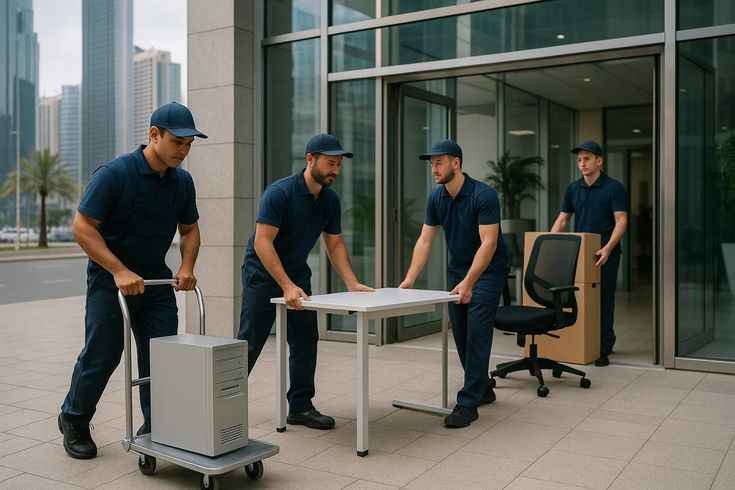
Moving is never the same for everyone. Moving a family home compared to an office for an organization means something entirely different, and most of the population usually underestimates the difference until they’re in the midst of the move and realize too late that they’re not well-prepared for the difference between home vs office relocation.
In this guide, we will address the differences between home and office moves and how each should be planned separately. We will also emphasize why it is essential to choose the right removal and relocation service providers in both cases.
Understanding Home vs Office Relocation
In essence, home vs office relocation differs in terms of purpose, magnitude, and complexity. Home relocation is mainly centered on personal items, comfort, and a family schedule. Office relocation, on the other hand, emphasizes functionality, security, and timelines.
Although both concepts entail the movement of packing, transport, and installation, the strategies used in the planning process, the labor needed, as well as the know-how employed, are as different as night and day. Acknowledgment of these variations is essential to avoid costly mistakes and stress.

Main Essentials of Office Relocation
The most apparent difference between residential moving and commercial moving processes is based on the type of items being moved. In residential moving, furniture, appliances, personal belongings, and other sentimental objects are being relocated. In an office move, office desks, computer equipment, confidential files, and commercial furniture are being relocated.
Another area where home relocation and office relocation differ is in flexibility. Residential relocation involves plenty of leeway, whereas office relocation is accomplished strictly within set timetables to ensure that no downtime is experienced in the business. This is why residential vs commercial movers function in two distinct ways.

Home Relocation Planning: What It Involves
Residential relocation planning is the process of ensuring a smooth transition from the old location to the new location. This is especially true with residential relocations, where the transition process should be geared towards a smooth and enjoyable relocation process. The home moving process usually comprises:
- Sorting and organizing household items
- Packing one’s own belongings carefully
- Coordinating move dates around family schedules
- Installation of utilities and furnishings in the new dwelling
These professional services ensure that fragile items, furniture, and valuables are packed securely and delivered safely.
Planning an Office Move: A Strategic Exercise
In this regard, office moving planning is a very structured process. Companies cannot afford to waste time, lose data, or experience delays. All the office moving process stages should be well-arranged and carried out. The relocation timeline will be comparatively short and full of details. It will include:
- Move analysis, audits, and space planning
- Disassembling and installation of IT infrastructure
- Secure treatment of confidential papers
- Department-wise relocation coordination
Such complexity demands professional office relocation companies with corporate moving experience. Many companies can suffer office moving losses if they hire office movers without having the necessary expertise.

Home Relocation vs Office Relocation: Key Planning Differences
When considering the difference between office relocation vs house moving, the most apparent difference is the risk or cost involved. House moving is inconvenient to the family involved. Office relocation can be costly. Home moving allows unboxing and flexibility, whereas office moving requires precision. This is the reason office relocation services always tend to be more organized, time-sensitive, and labor-intensive than moving services.
Equipment, Manpower, and Expertise Needed
Standard moving trucks, appropriate packing materials to protect the items being moved, and experienced handlers are usually what residential moves need. Office relocation requires specialized moving equipment, like IT crates, server racks, a labeling system, and lift planning.
These are the requirements that any professional moving and relocation company knows and hence assigns dedicated teams to residential and commercial projects. Choosing the wrong service provider, corporate moves, in particular, will result in damaged equipment and extended downtime.

Time Management: Homes vs Offices
Residential moving falls in broader timelines, from a few days to a week. One can unpack in bits, slowly, as adjustments may be needed in the families.
An office moving timeline, however, is usually condensed. Most businesses relocate during weekends or at night to reopen the next business day. The finesse involved here is a reason why organizations use the services of relocation companies and the best commercial moving company rather than just any other movers.
Corporate Relocation Services: Why They Matter
It’s not just moving furniture around; relocation involves project management, mitigation of risk, IT coordination, and support after the move is complete. In this way, employees can return to a fully functional workspace without disruption. From multi-national offices to local startups, businesses need seasoned providers of office relocation services that understand compliance, confidentiality, and efficiency.
Residential Moving Services: Comfort First
Residential moves are about emotional comfort and personal care. Families want movers to handle their belongings respectfully and maintain good communication during the process.
The professional residential moving service concerns careful packing, safe transportation, and thoughtful placement in a new house. It is this personal touch that makes all the difference between really professional home relocation services and a nondescript moving solution.
Choosing Between Residential vs Commercial Moving Companies
Generally, one of the commonest mistakes is taken while people hire the same movers for residential and office relocations without checking the expertise. Some companies handle both, but the approach must be specialized.
Residential vs commercial moving is based on processes, teams, and equipment, according to the type of relocation. Asking the right questions before hiring ensures you receive the correct level of service for your specific move.
Why Zuhal Pack Is the Right Choice for Both
Zuhal Pack knows the various crucial differences between home and office moving and offers custom solutions accordingly. We extend both home moving services and office moving services with dedication and guide our customers regarding home vs office relocation. Our teams specialize in:
- Full home moving solutions
- Organized office relocation planning
- Safe custody of domestic and corporate assets
- Timelines and prices that are dependable
Whether it’s a home move or an office move, packing and relocating can be a rather hectic process for an individual or a company, and this is where Zuhal Pack can ensure a smooth transition.

Planning Your Move with Confidence
Success in relocation requires planning, expertise, and the correct partner for the task. Knowledge of differences between home and office relocation will help you plan and save against costly downtime. Though both home and office relocation involve relocating people or organizations from one location to another, the processes and risks are entirely different.
Understanding home vs office relocation can help people and organizations take informed actions. With professional knowledge and services, both home and office moves become organized, efficient, and stress-free, exactly the way relocation should be.